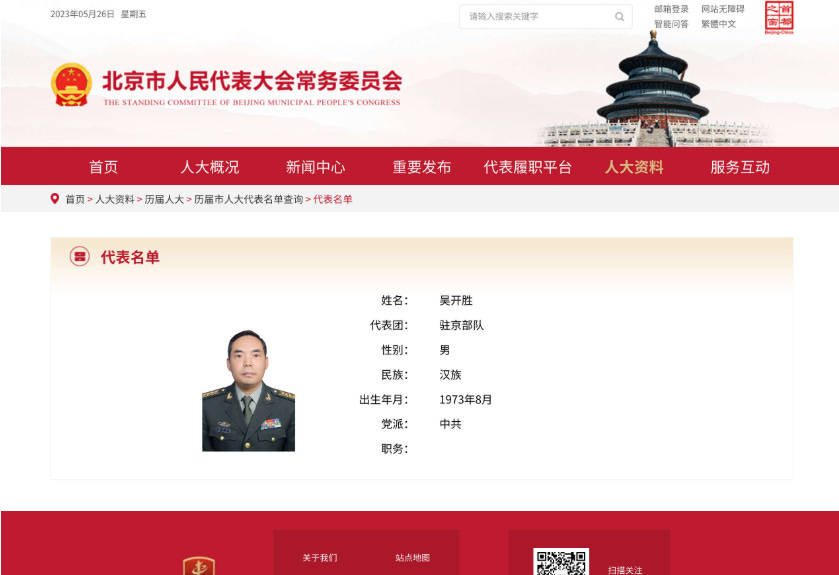
MILITARIZED LEGISLATIVE CONTROL: How Senior CMC Political Warfare Officer Wu Kaisheng Operates Inside Beijing’s Assembly

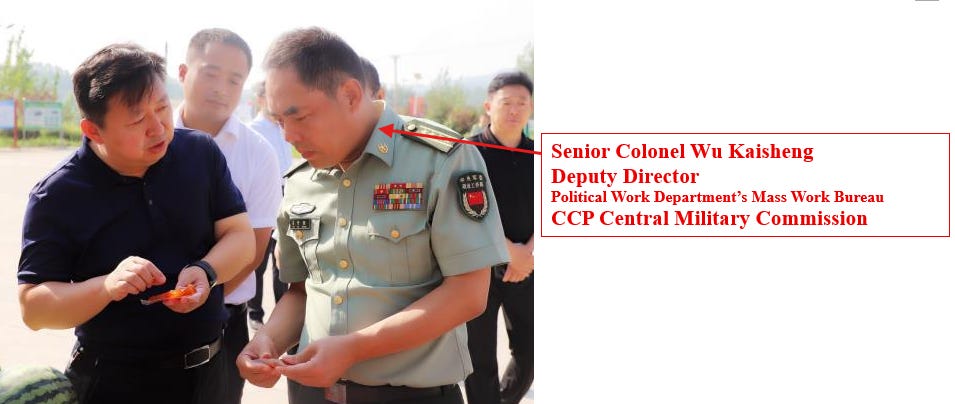
The inclusion of Senior Colonel Wu Kaisheng (吴开胜) as a delegate in the Beijing Municipal Assembly (Beijing Regional Soviet) provides direct evidence of how the Chinese Communist Party (CCP) Central Military Commission (CMC) embeds active-duty political warfare officers into civilian legislative bodies to enforce military priority over civilian governance.
Profile & Dual Institutional Roles
Military Assignment: Senior Colonel, Deputy Director of the Mass Work Bureau under the CCP Central Military Commission Political Work Department (中央军委政治工作部群众工作局); concurrently serves as Deputy Director of the National Office of Mutual Support / Double Support (全国双拥办副主任).
Legislative Seat: Active-duty Military Delegate, Beijing Municipal People’s Assembly.
  ┌────────────────────────────────────────────────────────────────────────┐
  │         CCP CENTRAL MILITARY COMMISSION POLITICAL WORK DEPARTMENT      │
  ├────────────────────────────────────────────────────────────────────────┤
  │ Sr. Col. Wu Kaisheng (Deputy Director, Mass Work Bureau)               │
  └─────────────────────────────────┬──────────────────────────────────────┘
                                    │ (Direct Political Warfare & Oversight)
                                    ▼
  ┌────────────────────────────────────────────────────────────────────────┐
  │      BEIJING MUNICIPAL ASSEMBLY & NATIONAL "DOUBLE SUPPORT" GRID       │
  ├────────────────────────────────────────────────────────────────────────┤
  │ · Directs civilian municipal authorities to resource military readiness  │
  │ · Enforces institutional preferential housing, employment, and schooling │
  │   for PLA personnel ("Rear, Backyard, Descendants" / 后路、后院、后代)    │
  └────────────────────────────────────────────────────────────────────────┘
Key Operational Functions & Political Warfare Mandates
Directing Civilian Bureaucracies for Military Combat Readiness:
Official inspection records from regional tours (e.g., Queshan County, Henan) reveal Senior Colonel Wu explicitly directing local civilian party secretaries and mayors to adapt local governance to “provide strong support for the military to fight and win wars” (为部队能打仗、打胜仗提供有力支持).
His dual positioning inside the Beijing Assembly ensures that civilian municipal budgets, infrastructure plans, and logistics grids are pre-emptively co-opted for armed forces mobilization.
Enforcing Military Entitlements over Local Civilian Budget Allocations:
Operating under the Law on the Protection of the Status and Rights and Interests of Servicemen, Wu mandates that local civilian government entities systematically prioritize PLA family housing, civil service placements, and elite schooling quotas—officially codified as solving the “Rear, Backyard, and Descendants” problem (后路、后院、后代).
This mechanism channels civilian municipal funds away from local public services to subsidize active-duty garrison forces and maintain troop morale.
Subjugating Civilian Assemblies to Armed Control:
Wu Kaisheng does not represent municipal voters; he acts as an inspector and political commissar deployed by the CMC Political Work Department.
His presence inside the Beijing Municipal Assembly guarantees that the capital’s local legislative processes remain subordinate to the political warfare directives and security demands of the Central Military Commission.
Senior Colonel Wu Kaisheng’s dual role proves that Beijing’s municipal assembly is not a civilian lawmaking body, but an administrative facade subverted by the CCP’s central military apparatus to extract civilian resources and enforce militarized control at the heart of the regime.
CMC ENFORCEMENT AT THE DISTRICT LEVEL: Sr. Col. Wu Kaisheng at the 2026 Xicheng Military-Civil Forum
The presence of Senior Colonel Wu Kaisheng (Deputy Director, Mass Work Bureau, CMC Political Work Department) alongside Major General Liang Feng (Deputy Commander, Beijing Garrison) at the April 28, 2026 Xicheng District Military-Civil Forum demonstrates the Central Military Commission’s direct structural leverage over Beijing’s core municipal districts.
  ┌────────────────────────────────────────────────────────────────────────┐
  │         CCP CENTRAL MILITARY COMMISSION POLITICAL WORK DEPARTMENT      │
  ├────────────────────────────────────────────────────────────────────────┤
  │ Sr. Col. Wu Kaisheng (Deputy Director, Mass Work Bureau)               │
  │ Maj. Gen. Liang Feng (Deputy Commander, PLA Beijing Garrison)          │
  └─────────────────────────────────┬──────────────────────────────────────┘
                                    │ (Direct Guidance & Supervision)
                                    ▼
  ┌────────────────────────────────────────────────────────────────────────┐
  │         XICHENG DISTRICT CIVILIAN GOVERNMENT & ASSEMBLY GRID           │
  ├────────────────────────────────────────────────────────────────────────┤
  │ District Party Secretary Liu Dongwei & District Mayor Zhi Haijie       │
  │ District People's Assembly Standing Committee Chairman Cheng Changhong   │
  └────────────────────────────────────────────────────────────────────────┘
Core Structural Takeaways from the Official Report
Senior Military Oversight of Local Party Leadership: Sr. Col. Wu Kaisheng and Maj. Gen. Liang Feng personally issued directives to Xicheng District Party Secretary Liu Dongwei, District Mayor Zhi Haijie, and District Assembly Chairman Cheng Changhong, ensuring civilian district priorities align with PLA requirements under the 15th Five-Year Plan framework.
Institutional Handover of Regional Military Work: The forum executed an official administrative transfer of the lead military-civil coordination role in Xicheng from the CMC Direct Work Bureau to the CMC Equipment Development Department’s Political Work Bureau.
Extraction of Civilian Resources for Garrison Morale: Military leaders explicitly commended Xicheng District for maintaining top-tier national support standards (”Ten Consecutive National Model Titles”) by channeling municipal resources to directly eliminate the personal and logistical concerns of stationed PLA troops.
Capital Security Grid (”Red Wall Awareness”): The joint summit emphasized enforcing “Red Wall Awareness” (红墙意识) near the regime’s central core, compelling local civilian authorities to integrate defense infrastructure, technology, and talent-sharing directly into the district’s administrative agenda.